Views: 0 Author: Site Editor Publish Time: 2026-03-26 Origin: Site


Are nonwoven bags the future of eco-friendly packaging? These bags combine durability with sustainability. Nonwoven making machines play a key role in producing them efficiently.
In this article, you’ll learn about the essential components of a nonwoven making machine. We’ll explore how these parts work together to create high-quality bags.
When exploring the essential parts of a nonwoven bag making machine, understanding each component’s role helps in optimizing production. This machine transforms nonwoven fabric rolls into durable, reusable bags efficiently. Here’s a detailed look at the core components found in most nonwoven bag machines:
This system is the starting point for the non woven fabric bag machine. It carefully unwinds fabric rolls and feeds them into the machine. Key elements include tension controllers and motors that keep the fabric flat and aligned, preventing wrinkles or misfeeds. Proper fabric feeding ensures consistent bag quality and reduces material waste.
After feeding, the fabric is folded into the desired bag shape. This mechanism controls the size and style—whether it’s a flat bag, box bag, or D-cut bag. Precision folding is critical, as it sets the foundation for accurate sealing and cutting.
Sealing is vital for bag strength and durability. Many nonwoven bag making machines use ultrasonic welding, which bonds fabric fibers using high-frequency vibrations without glue or thread. Heat sealing is another method, using controlled temperature to fuse fabric edges. Both technologies provide waterproof, strong seams and a neat finish.
Once sealed, the fabric moves to cutting units that trim the bags to exact dimensions. Advanced machines synchronize cutting with sealing to maximize speed and precision. Some models include punching units to create holes or special shapes, such as handle cutouts.
For bags requiring handles, specialized units attach loop handles or D-cut handles. Ultrasonic sealing often bonds handles quickly and securely, eliminating the need for sewing or adhesives. This feature enhances bag functionality and appearance.
Many nonwoven bag machines incorporate printing systems to add logos, slogans, or patterns. These modules support multi-color printing and high-resolution images, allowing businesses to customize bags for branding or promotional purposes.
Modern non woven fabric bag machines feature programmable logic controllers (PLC) with touch screen interfaces. Operators can easily adjust bag size, speed, and production count. Sensors like photoelectric trackers monitor fabric alignment and print marks, ensuring consistent quality and reducing errors.
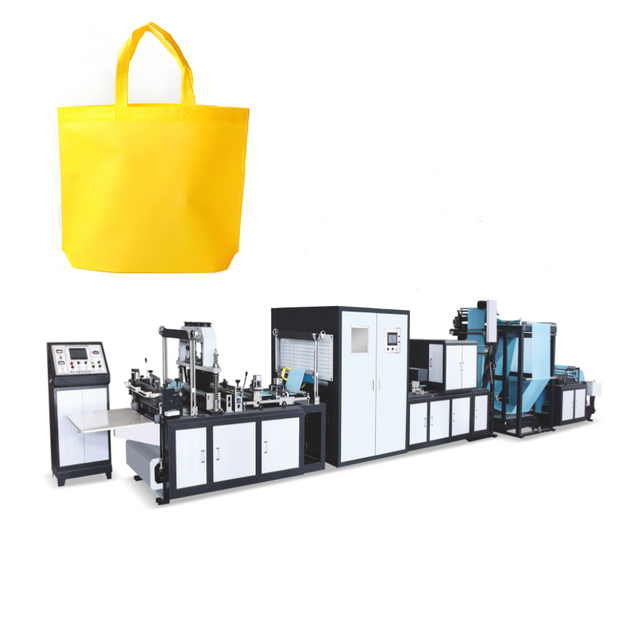
The fabric feeding and unwinding system is a critical part of any nonwoven making machine. It sets the stage for smooth production by ensuring the non woven bag making fabric feeds consistently and without wrinkles. Let’s explore the key components and technologies that make this system efficient and reliable.
Magnetic power tension controllers regulate the tension of the fabric roll during unwinding. They use magnetic force to apply consistent resistance, keeping the fabric tight and flat as it feeds into the machine. This tension control prevents slack or overstretching, which could cause wrinkles or misalignment. By maintaining steady tension, these controllers help reduce material waste and improve bag quality.
Stepping motors and servo motors drive the fabric feeding rollers with high precision. Stepping motors move the fabric in controlled increments, allowing exact length feeding for each bag. Servo motors offer smooth speed variation and quick response to control signals. Together, they ensure the fabric advances steadily and stops accurately for folding, sealing, and cutting. This precision is vital for producing uniform nonwoven fabric bags and handling different fabric thicknesses.
Photoelectric sensors detect the edges and print marks on the fabric. They monitor the fabric position in real time and send signals to the control system to correct any deviation. This edge positioning control ensures the fabric stays centered, preventing off-center seals or cuts. The sensors also help detect fabric presence to avoid running the machine empty, reducing errors and downtime.
To prevent wrinkles and misfeeds, the system uses edge positioning devices combined with tension control. Guide rollers and alignment bars keep the fabric edges straight. Some machines employ automatic web correction systems that adjust fabric position dynamically based on sensor feedback. These techniques maintain smooth fabric flow, which is essential for high-speed production on non woven carry bag making machines.
In a nonwoven making machine, sealing and cutting are critical steps that determine the bag’s durability and appearance. These mechanisms work together seamlessly to produce strong, neat, and consistent nonwoven fabric bags. Let’s explore the main sealing and cutting technologies used in nonwoven bag making machines and how they enhance production efficiency.
Ultrasonic welding is a popular sealing method in nonwoven bag machines. It uses high-frequency sound waves to generate heat through vibration, bonding fabric fibers without glue or thread. This process creates strong, waterproof seams that are clean and free of burrs.
Advantages of ultrasonic welding include:
Rapid sealing speed, increasing production output
No need for additional adhesives, reducing material costs
Strong, durable bonds ideal for reusable bags
Environmentally friendly since it avoids chemical use
Minimal heat impact on fabric, preventing damage
During operation, the ultrasonic welding unit applies pressure and vibration to the fabric edges, instantly fusing them. This technology is especially effective for sealing handles, edges, and gussets on nonwoven carry bags.
Heat sealing is another common sealing technique used in nonwoven bag making machines. It involves applying controlled heat and pressure to melt and fuse fabric edges. Temperature control is crucial here to ensure consistent seals without burning or weakening the fabric.
Modern nonwoven bag machines feature automated temperature controllers that maintain precise heat levels. This control helps produce uniform seams and reduces the risk of material deformation. Heat sealing is often used for D-cut bags and box bags, where strong edge seals are essential.
Cutting the fabric into bag shapes happens immediately after sealing. Synchronizing cutting with sealing improves machine speed and accuracy. The cutting unit operates in tandem with sealing units, trimming the bags precisely along sealed edges.
This synchronization reduces fabric waste and ensures each bag meets exact size specifications. Photoelectric sensors often guide the cutting process by detecting print marks or fabric edges, ensuring perfect alignment.
Some nonwoven bag machines include punching units to create holes or special shapes like handle cutouts. These units use mechanical or pneumatic punches to quickly and cleanly cut through the fabric.
Punching is essential for bags that require D-cut handles or ventilation holes. Integrating punching with sealing and cutting units streamlines production and maintains consistent bag quality.
Automation plays a vital role in enhancing the efficiency and quality of nonwoven bag making machines. These machines use advanced control systems and sensors to streamline production, reduce errors, and maintain consistent output. Let’s explore the key automation and control features commonly found in modern nonwoven bag machines.
Programmable Logic Controllers (PLC) combined with touch screen interfaces offer an intuitive way for operators to control the nonwoven making machine. Through these screens, users can:
Set bag dimensions and styles
Adjust production speed
Monitor machine status in real time
Program production quantities
This user-friendly interface simplifies machine operation and reduces the need for extensive training. It also allows quick changes to settings, making it easy to switch between different nonwoven bag making fabric types or bag models such as D-cut or loop handle bags.
Photoelectric sensors track fabric position and print marks during production. They help maintain precise alignment by detecting any deviation in fabric feeding or printing. This feature ensures:
Correct placement of seals and cuts
Consistent printing registration
Reduced fabric waste due to misalignment
By continuously monitoring the fabric, photoelectric tracking supports high-quality output and lowers the chance of defects in nonwoven fabric bags making machines.
Nonwoven bag machines often include automatic counting systems that tally the number of bags produced. Once the preset quantity is reached, the machine can automatically stop. This feature:
Prevents overproduction
Simplifies batch processing
Reduces labor by eliminating manual counting
It enhances production control, especially when manufacturing custom orders or limited runs on a non woven carry bag making machine.
Besides photoelectric sensors, other sensors monitor various machine functions such as temperature, tension, and motor performance. These sensors provide real-time data to the PLC, enabling:
Immediate detection of faults or fabric jams
Automatic adjustments to maintain tension and alignment
Alerts for maintenance needs
This integration minimizes downtime and ensures smooth operation in nonwoven bag machine components.
Automation significantly boosts production speed by coordinating complex tasks like fabric feeding, folding, sealing, cutting, and handle attachment. It also improves consistency by:
Reducing human error
Maintaining uniform bag size and quality
Allowing continuous operation with minimal supervision
These advantages make automated nonwoven fabric bags making machines ideal for businesses aiming to scale up production while maintaining high standards.
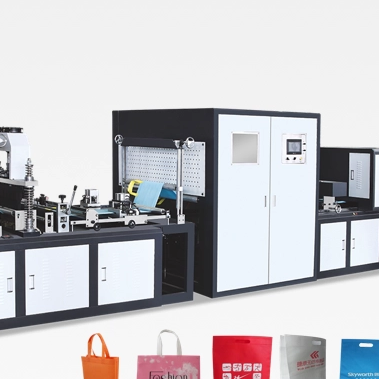
In addition to the core parts, a nonwoven bag making machine includes several functional components that enhance production quality, efficiency, and bag durability. These add-ons make the machine versatile, enabling it to handle different bag styles and customization needs. Let’s explore these additional components and their benefits.
After sealing, the bags often retain heat, which can deform the fabric or weaken the seams. Cooling systems quickly reduce the temperature of sealed areas, preserving the bag’s shape and strength. This is especially important for heat sealing units in non woven fabric bag machines. Efficient cooling prevents wrinkles and ensures the bags come out crisp and ready for stacking or printing.
Static electricity can cause fabric sheets to stick together or attract dust, leading to production issues. High voltage static processors neutralize static charges on the nonwoven fabric during feeding and processing. This improves fabric handling by reducing jams, misfeeds, and defects. It also helps maintain a clean working environment, which is crucial for printing and sealing quality.
For bags with loop handles, automatic bonding units attach and seal handles using ultrasonic welding or heat sealing. These units provide fast, secure, and neat handle attachment without manual labor or adhesives. By integrating this system, non woven loop handle bag making machines increase production speed and ensure consistent handle placement and strength.
Many businesses require customized branding on their bags. Printing modules integrated into nonwoven bag machines allow high-resolution, multi-color printing directly on the fabric. These systems support logos, slogans, and patterns, enhancing marketing impact. Some machines include drying or curing units to fix the ink quickly, maintaining print clarity and durability.
After production, finished bags need organized collection and stacking to facilitate packaging and shipping. Conveyor systems transport bags smoothly from the cutting section to stacking areas. Automated stacking units can pile bags neatly, reducing manual handling and speeding up the packing process. This keeps the workflow continuous and efficient, especially in high-volume production settings.
Selecting the perfect nonwoven making machine is crucial for meeting your business goals efficiently. With various options available, understanding key factors like fabric compatibility, production speed, automation levels, customization, and budget helps you make an informed choice.
Different nonwoven bag machines handle fabric types and thicknesses differently. Some machines are optimized for thinner non woven bag making fabric, ideal for lightweight shopping bags. Others support thicker, sturdier materials used in reusable or heavy-duty bags.
Check if the machine supports your preferred nonwoven fabric type (e.g., spunbond, laminated).
Confirm the fabric GSM (grams per square meter) range the machine can process smoothly.
Machines designed for non woven fabric manufacturing may include tension controllers and sensors to accommodate diverse fabric qualities.
Choosing a machine compatible with your fabric ensures smooth feeding, consistent sealing, and reduces material waste.
Your desired bag style influences production speed significantly. Simple flat bags or basic non woven carry bags are faster to produce. Bags with handles, gussets, or box bottoms require additional steps, reducing output speed.
Fully automatic nonwoven bag machines can produce up to 220 bags per minute for simple styles.
Complex styles like non woven d cut bag making machines or non woven box bag making machines may have slower speeds.
Balance your production volume needs with the bag styles you want to offer.
Understanding this trade-off helps you select a machine that meets your output goals without compromising bag quality.
Automation level impacts labor costs, production speed, and ease of use.
| Machine Type | Features | Best For | Benefits |
|---|---|---|---|
| Fully Automatic | PLC control, ultrasonic sealing, auto cutting, handle attachment | Large factories, high volume | High speed, less labor, consistent quality |
| Semi-Automatic | Manual feeding or handle attachment, simpler controls | Small businesses, custom orders | Lower cost, easier maintenance, flexible |
Fully automatic machines streamline the entire process, including printing and stacking. Semi-automatic options allow more hands-on control and are budget-friendly for startups.
Many nonwoven bag machines offer modular features to tailor production:
Printing modules for logos and branding.
Handle attachment units like non woven loop handle bag making machines or non woven bag handle sealing machines.
Different bag style modules (D-cut, box bag, gusseted bags).
Cooling and static elimination systems to improve bag quality.
Customizable machines help you adapt to market trends and customer preferences.
Consider your financial and facility constraints:
Fully automatic machines cost more upfront but save labor and increase output.
Semi-automatic machines have a lower initial cost but may need more operators.
Evaluate space for machine footprint, including feeding, printing, and stacking areas.
Factor in maintenance and operating costs for long-term budgeting.
Choosing a machine that fits your budget and space ensures sustainable operations.
Maintaining your nonwoven making machine is essential for smooth operation and long-term performance. Proper care minimizes downtime and keeps your nonwoven bag machine components working efficiently. Here’s what you need to know about maintenance, troubleshooting, and best practices for your nonwoven bag making machine.
Regular cleaning prevents dust, fabric scraps, and debris from accumulating on machine parts. After each production run, wipe down surfaces, especially around cutting blades, sealing bars, and feeding rollers. Lubricate moving parts like gears, chains, and bearings according to the manufacturer’s schedule. Proper lubrication reduces wear and tear, ensuring smooth fabric feeding and accurate bag formation.
Well-trained operators are key to maximizing your nonwoven fabric bags making machine’s productivity. Training should cover machine setup, operating procedures, and safety protocols. Operators must understand how to adjust tension controllers, calibrate sensors, and change bag specifications on the PLC touch screen. Knowledgeable operators can quickly identify and resolve minor issues before they escalate.
Fabric Wrinkles or Misalignment: Often caused by incorrect tension or faulty edge positioning sensors. Check magnetic power tension controllers and recalibrate photoelectric sensors regularly.
Poor Sealing Quality: Inspect ultrasonic welding horns or heat sealing bars for wear or contamination. Replace worn parts and verify temperature settings.
Cutting Inaccuracy: Ensure cutting blades are sharp and properly aligned. Confirm synchronization between sealing and cutting units is functioning correctly.
Machine Stops Unexpectedly: Check for fabric jams, sensor malfunctions, or electrical faults via the PLC interface. Restart after resolving issues.
Proactive troubleshooting saves time and prevents production losses.
Implement consistent quality checks at different stages. Inspect bag dimensions, seal strength, and handle attachment integrity. Use photoelectric tracking data to monitor print registration and fabric alignment. Detect defects early to reduce waste and maintain high product standards. Document issues and corrective actions to improve processes.
Always follow safety guidelines to protect operators and equipment. Operators should wear protective gear such as gloves and safety glasses. Keep emergency stop buttons accessible and test them regularly. Never bypass safety interlocks or operate the machine with damaged guards. Conduct periodic safety training sessions to reinforce best practices.
Choosing the right nonwoven bag making machine maximizes production efficiency and bag quality. Key components like fabric feeding, sealing, cutting, and automation ensure smooth operation and consistent output. Understanding these parts helps optimize processes and reduce waste. Future machines will offer more advanced automation and customization features. For best results, select a machine suited to your fabric and production needs, and maintain it properly. Huabo’s nonwoven bag making machines deliver reliable performance and innovative solutions that add real value to your business.
A: The core nonwoven bag making machine parts include the fabric feeding and unwinding system, bag formation and folding mechanism, ultrasonic and heat sealing units, cutting and trimming units, handle attachment systems, printing modules, and advanced control systems like PLC touch screens and sensors. These components work together to ensure efficient production of durable nonwoven fabric bags.
A: The fabric feeding and unwinding system uses magnetic power tension controllers, stepping and servo motors, and photoelectric sensors to maintain consistent tension and alignment of the non woven bag making fabric. This prevents wrinkles and misfeeds, ensuring smooth production and reducing material waste in nonwoven bag machines.
A: Ultrasonic welding bonds fabric fibers using high-frequency vibrations without adhesives, producing strong, waterproof seams quickly. It enhances bag durability and appearance, reduces material costs, and is environmentally friendly, making it a popular sealing technology in nonwoven bag making machine parts.
A: Modern nonwoven making machines often feature PLC touch screen interfaces, photoelectric tracking sensors, automatic counting and stopping functions, and real-time monitoring sensors. These automation components improve production speed, consistency, reduce errors, and simplify operation of non woven carry bag making machines.
A: Regular cleaning, lubrication, and calibration of tension controllers, sensors, ultrasonic horns, and cutting blades are essential. Training operators on machine setup and safety protocols helps prevent issues like fabric wrinkles, poor sealing, or cutting inaccuracies. Proper maintenance ensures reliable operation of your nonwoven making machine.