Views: 0 Author: Site Editor Publish Time: 2026-04-10 Origin: Site


Why are nonwoven shoe bags becoming more popular in packaging and storage today? They offer better protection, cleaner presentation, and reusable value across industries. In this article, you will learn their main applications and how a Nonwoven Shoe Bag Making Machine supports efficient, flexible production for growing business needs.
Nonwoven shoe bags are produced from bonded fibers rather than woven yarn, which gives them a unique balance of softness and structural stability. The material is formed through heat, pressure, or chemical bonding, allowing it to maintain shape while remaining flexible enough for practical packaging use. This makes nonwoven fabric especially suitable for shoe storage, where both protection and ease of handling are important.
From a material performance perspective, nonwoven fabric offers several key advantages that directly impact usability:
Breathability and airflow
The material allows air to circulate, which helps prevent moisture accumulation inside the bag. This feature is particularly useful during long-term storage or shipping, where trapped humidity could otherwise affect shoe condition.
Lightweight yet durable structure
Nonwoven bags are easy to carry and handle in bulk packaging operations, while still providing resistance to tearing. This combination supports repeated use without significantly increasing transportation weight.
Soft surface for protection
The fabric surface is gentle and does not scratch sensitive materials such as leather or suede. This makes it suitable for both premium footwear packaging and everyday storage needs.
Compared with traditional plastic or paper packaging, nonwoven shoe bags provide a more balanced combination of durability, usability, and presentation. Instead of focusing on single-use convenience, they offer long-term value that aligns better with modern packaging expectations.
One of the most important advantages is reusability. While plastic bags are often discarded after a single use, nonwoven shoe bags can be reused multiple times without losing structural integrity. This not only reduces waste but also enhances the perceived value of the packaged product, especially in retail environments.
Another key benefit is cost efficiency in mass production. Although the initial material cost may be comparable, the use of a Nonwoven Shoe Bag Making Machine significantly improves production efficiency. Automated processes reduce labor requirements, increase output consistency, and minimize material waste, which leads to better cost control over time.
In addition, nonwoven shoe bags offer superior protection and presentation. Unlike thin plastic bags that easily wrinkle or tear, nonwoven bags maintain their shape and provide a cleaner, more professional appearance. This is particularly important for footwear brands and e-commerce sellers who want to deliver a better unboxing experience.
The following table highlights the main differences between nonwoven shoe bags and traditional packaging options:
| Feature | Nonwoven Shoe Bags | Plastic Bags | Paper Bags |
|---|---|---|---|
| Reusability | High, long-term use | Very limited | Moderate |
| Protection | Soft and protective | Weak, easy to tear | Medium, not waterproof |
| Branding | Excellent printing surface | Limited | Good but less durable |
| Cost efficiency | Lower over time | Higher with repeated use | Moderate |
In the footwear industry, nonwoven shoe bags are widely used as a practical packaging solution for both manufacturers and retailers. They help protect shoes from dust, scratches, and handling damage during storage and transportation, while also improving the overall presentation of the product. Compared to traditional packaging, they offer a cleaner and more structured appearance, which enhances brand perception in both physical stores and e-commerce channels.
Used by shoe brands and factories
They serve as inner packaging for various footwear types, including leather shoes, sports shoes, and casual footwear. This helps standardize packaging across product lines and improves handling efficiency in warehouses.
Protection during storage and shipping
They reduce exposure to dust and friction during transit. This ensures that shoes arrive in better condition, which lowers return rates and improves customer satisfaction.
Enhancing product presentation
They provide a more premium and organized look compared to plastic bags. This is particularly useful for mid-to-high-end footwear brands aiming to improve unboxing experience.
| Application Scenario | Key Function | Business Benefit |
|---|---|---|
| Factory packaging | Protects shoes in bulk storage | Reduces damage and returns |
| Retail display | Improves visual presentation | Enhances brand image |
| E-commerce shipping | Adds protective inner layer | Better customer experience |
Nonwoven shoe bags are also widely used in daily life, especially for travel and home organization. They help separate shoes from clothing in luggage or storage spaces, which keeps items cleaner and more organized. Because the material is breathable and lightweight, it performs well in environments where airflow and space efficiency matter.
In this context, users appreciate both functionality and convenience. The bags are easy to fold, store, and reuse, making them suitable for frequent travelers and households alike. From a production standpoint, a Nonwoven Shoe Bag Making Machine supports different size configurations, which allows manufacturers to produce bags tailored for various storage needs.
Use in luggage and closets
They help organize shoes during travel and daily storage. This reduces clutter and improves packing efficiency.
Separation of shoes and clothing
They prevent dirt from transferring onto clean clothes. This is especially important for long trips or shared storage spaces.
Home storage solutions
They can be used in wardrobes, shelves, or storage boxes. This keeps footwear organized while maintaining cleanliness.
In service-related industries, nonwoven shoe bags are often used for temporary storage, hygiene control, and operational convenience. Hotels, laundry services, and cleaning providers use them to manage footwear during guest stays or service processes. They offer a simple solution for handling shoes in environments where cleanliness and organization are important.
Hotels and guest services
They are provided to guests for storing shoes in rooms or during travel. This adds convenience and improves guest experience.
Laundry and cleaning processes
They are used to hold shoes during cleaning or transport. This helps maintain hygiene and prevents cross-contamination.
Temporary storage and hygiene control
They offer a clean and breathable solution for short-term storage. This is useful in environments where quick handling is required.
Nonwoven shoe bags are also valuable in marketing and promotional activities. Their printable surface allows businesses to add logos, colors, and branding elements, turning them into reusable promotional tools. This makes them suitable for events, campaigns, and branded product packaging.
In addition, they play a role in e-commerce packaging by adding an extra layer of protection and presentation. When combined with efficient production through a Nonwoven Shoe Bag Making Machine, businesses can quickly scale customized orders and meet different market demands.
Custom printed shoe bags for branding
They can carry logos and brand messages. This increases visibility and creates a lasting impression for customers.
Use in promotional campaigns and events
They are distributed during product launches, exhibitions, or seasonal campaigns. This helps extend brand reach beyond the point of sale.
Added protection for online order delivery
They act as an inner packaging layer. This improves product presentation and reduces damage during shipping.
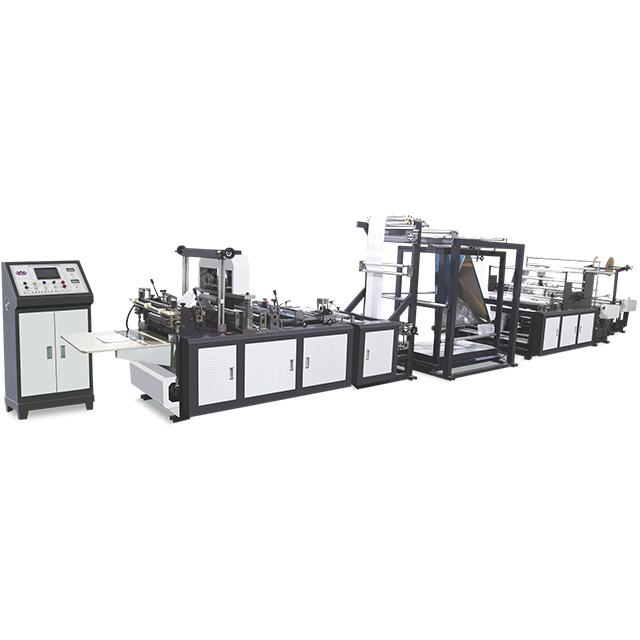
For manufacturers entering or expanding in the nonwoven packaging market, production efficiency becomes a key concern. A Nonwoven Shoe Bag Making Machine addresses this by automating core processes such as feeding, cutting, sealing, and counting, which significantly reduces manual intervention while improving consistency across batches.
High-speed automatic production
The machine operates continuously once set up, which increases daily output compared to manual processes. This allows manufacturers to meet bulk order requirements more efficiently and reduce production bottlenecks.
Consistent bag size and quality
Automated control systems ensure that each bag follows the same dimensions and sealing parameters. This consistency is important for brand packaging and reduces quality complaints.
Reduced labor costs
Fewer operators are needed to manage the production line, which lowers labor expenses over time. It also minimizes human error, leading to more stable output.
| Production Factor | Manual Production | Machine-Based Production |
|---|---|---|
| Output speed | Low and inconsistent | High and stable |
| Quality consistency | Depends on operator skill | Controlled and uniform |
| Labor requirement | High | Reduced |
| Error rate | Higher | Lower |
Modern packaging markets require flexibility, and a Nonwoven Shoe Bag Making Machine is designed to support a wide range of customization needs. Instead of producing a single fixed product, manufacturers can adjust machine settings to create different bag sizes, styles, and configurations based on client requirements.
This flexibility is especially valuable for businesses serving multiple industries, such as footwear, travel accessories, and promotional packaging. By using one machine for various applications, companies can optimize equipment investment while expanding their product range.
Adjustable bag size and design
Operators can modify parameters such as width, length, and handle type to produce different bag formats. This makes it easier to respond to changing market demands.
Logo printing compatibility
The production process can align with printing systems, allowing for accurate placement of logos and designs. This supports branding requirements for retail and promotional use.
Multi-function production capability
Some machines can produce more than just shoe bags, including drawstring bags or simple packaging bags. This increases production versatility and market coverage.
Quality control is essential in packaging production, especially when products are used for protection and presentation. A Nonwoven Shoe Bag Making Machine integrates sealing technologies, such as ultrasonic welding, to create strong and clean edges without damaging the material structure.
This method improves both durability and appearance, which are important for retail and e-commerce applications. Consistent sealing also reduces the likelihood of defects, such as weak joints or uneven edges, which can affect usability and brand perception.
Ultrasonic sealing advantages
It bonds materials without the need for additional adhesives, resulting in cleaner and more efficient production. This process also reduces material waste and improves sealing precision.
Strong and clean bag edges
The sealing process produces smooth and firm edges, which enhance both durability and visual quality. This is important for products intended for repeated use.
Reduced production defects
Automated systems monitor and control key parameters, which helps minimize inconsistencies. This leads to fewer rejected products and better overall efficiency.
From a long-term perspective, investing in a Nonwoven Shoe Bag Making Machine helps businesses manage costs more effectively while preparing for future growth. Although there is an initial equipment investment, the reduction in labor, waste, and production errors leads to better cost efficiency over time.
Scalability is another important factor. As demand increases, manufacturers can rely on automated systems to expand output without significantly increasing operational complexity. This makes it easier to handle seasonal peaks, large contracts, or market expansion.
Lower long-term production cost
Automation reduces reliance on manual labor and minimizes material waste. Over time, this leads to a lower cost per unit.
Suitable for large-volume orders
High-speed production supports bulk manufacturing, which is essential for supplying large clients or distributors.
Flexible for growing demand
The machine can operate continuously and adapt to different production scales, allowing businesses to respond quickly to market changes.
When selecting a Nonwoven Shoe Bag Making Machine, technical specifications are often the first factors buyers review. These parameters directly influence production capacity, product range, and long-term operational efficiency. Instead of focusing on a single number, it is more practical to evaluate how these parameters work together in real production scenarios.
Production speed and capacity
A higher output rate supports large-volume orders and improves delivery timelines. However, stable performance is just as important as speed to ensure consistent quality.
Bag size range and material compatibility
Machines that support multiple sizes and fabric types offer greater flexibility. This allows businesses to serve different markets without additional equipment investment.
Power consumption and machine footprint
Efficient energy usage lowers operational costs, while appropriate machine dimensions ensure smooth installation within factory space constraints.
Automation level significantly affects both productivity and ease of use. A modern Nonwoven Shoe Bag Making Machine typically integrates PLC systems and touch screen interfaces, which simplify operation and improve control accuracy. These features allow operators to adjust parameters quickly without complex manual intervention.
Ease of setup and adjustment is another important consideration. Machines that allow fast parameter changes reduce downtime when switching between different bag sizes or designs. This is particularly useful for businesses handling customized orders or multiple product lines.
Operator training requirements should not be overlooked. While advanced machines offer more functions, they should still be intuitive enough for operators to learn quickly. A user-friendly interface reduces errors and improves overall efficiency.
Choosing the right machine is not only about specifications, but also about the supplier behind it. A manufacturer’s experience in nonwoven machinery production can influence machine design quality, reliability, and long-term performance. Suppliers with industry experience are more likely to provide machines that meet practical production needs rather than just theoretical specifications.
After-sales support is equally important. Installation guidance, operator training, and technical assistance ensure that the machine can be used effectively from the beginning. In addition, access to spare parts and maintenance services helps minimize downtime and extend machine lifespan.
A key step in choosing the right Nonwoven Shoe Bag Making Machine is aligning its capabilities with your actual business requirements. Instead of selecting the most advanced or highest-speed machine, it is more effective to match the equipment to your target market and production goals.
For example, businesses focusing on footwear packaging may prioritize consistent size and quality, while those targeting promotional products may require more flexibility in design and printing compatibility. Understanding your primary application helps narrow down the most suitable machine configuration.
Long-term planning should also be considered. As demand grows, the machine should be able to support increased production without requiring major upgrades. This ensures that the investment remains valuable over time.
Nonwoven shoe bags serve packaging, travel, and storage needs across industries. They offer protection, reusability, and better presentation. Huabo provides efficient solutions through its Nonwoven Shoe Bag Making Machine, supporting stable production, flexible designs, and consistent quality for growing business demands.
A: It produces nonwoven shoe bags for packaging, storage, and retail use efficiently.
A: They are reusable, breathable, and better for protection and branding.
A: It automates cutting and sealing, ensuring faster and consistent output.
A: Yes, it allows size changes and works with printed designs for branding.
A: Footwear, travel, hospitality, and e-commerce commonly use them.