Views: 0 Author: Site Editor Publish Time: 2026-01-06 Origin: Site


Non-woven bags have emerged as a durable, eco-friendly alternative to plastic. These bags are made from sustainable materials, offering strength and reusability.
In this article, we’ll explore how non-woven bags are made, what makes them durable, and how businesses can benefit from using them. You'll learn about the materials, production process, and design flexibility of non-woven bags.
Non-woven bags are bags made from non-woven fabrics, which are materials produced by bonding fibers together using mechanical, chemical, or heat processes instead of traditional weaving. These bags are often made from polypropylene (PP), polyester (PET), or natural fibers. Non-woven bags are known for their strength, versatility, and eco-friendliness. Unlike plastic bags, they can be reused multiple times, making them a sustainable alternative.
The production of non-woven bags involves several key steps:
1. Raw Material Preparation: The primary material used is polypropylene or polyester, which is melted and extruded into fibers.
2. Web Formation: These fibers are spread out to form a web on a conveyor belt.
3. Bonding: The fibers are bonded together using heat, chemicals, or mechanical methods, creating a durable fabric.
4. Cutting and Shaping: The fabric is then cut into the desired shape for the bags.
5. Sewing and Assembling: The bag is sewn together, handles are attached, and any additional features (such as zippers or closures) are added.
6. Finishing: Finally, the bag undergoes finishing processes such as printing, lamination, or heat pressing.
The materials used in non-woven bags play a significant role in their strength and durability. Common materials include:
● Polypropylene (PP): The most common material, offering high strength, low cost, and recyclability.
● Polyester (PET): Known for its durability and flexibility, PET is often used for bags that require additional strength.
● Natural Fibers: Fibers such as jute, hemp, and bamboo are used to create biodegradable and eco-friendly bags.
Material | Description | Benefits |
Polypropylene (PP) | A synthetic plastic material used in most non-woven bags. | Durable, lightweight, recyclable. |
Polyester (PET) | A synthetic fiber often used in non-woven bags. | Strong, water-resistant, recyclable. |
Natural Fibers (e.g., cotton, hemp, jute) | Biodegradable fibers used in eco-friendly bags. | Renewable, biodegradable, low environmental impact. |
The durability of non-woven bags is influenced by several factors:
● Bonding Process: The method used to bond fibers, such as heat bonding or chemical bonding, directly affects the strength of the final product. Heat bonding creates a more robust, tear-resistant fabric.
● Material Choice: The type of fiber used plays a crucial role in the bag's durability. For instance, polypropylene is known for its resistance to tearing and stretching, while polyester offers additional strength and resistance to wear.
● Fabric Thickness: Thicker fabrics tend to be stronger and more durable, allowing the bag to carry heavier loads without tearing.
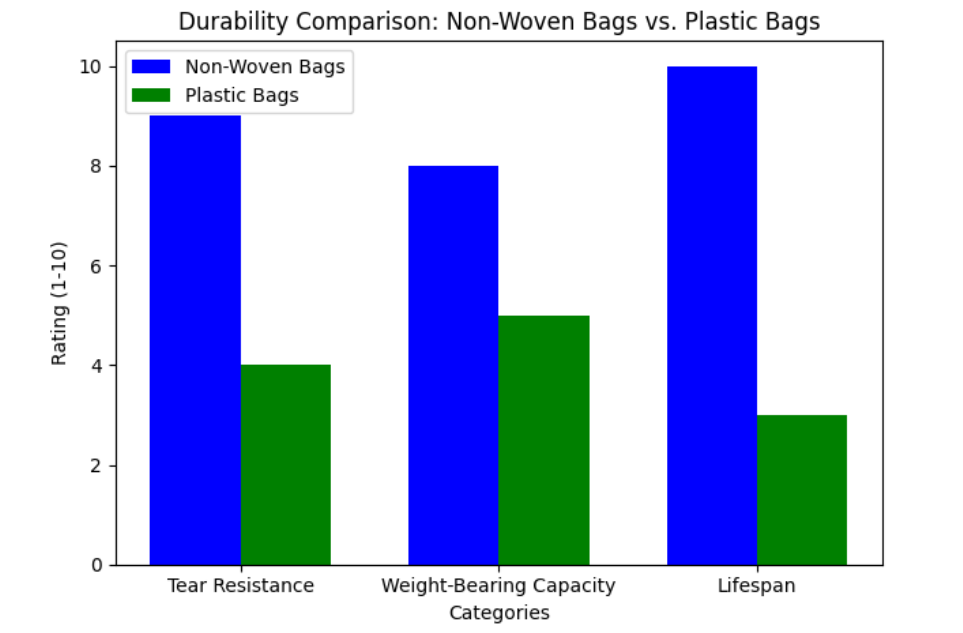
When compared to traditional plastic bags, non-woven bags are far more durable. Plastic bags are typically thin, tear easily, and are only suitable for single-use. In contrast, non-woven bags are designed to withstand regular use, offering far superior strength and the ability to carry heavier items. The material's durability also means that non-woven bags can be reused multiple times, significantly reducing waste.
Feature | Non-Woven Bags | Plastic Bags |
Durability | More durable and long-lasting. | Less durable, prone to tearing. |
Eco-Friendliness | Made from recyclable materials, reusable. | Often single-use, non-recyclable. |
Customization | Easy to customize with logos and designs. | Limited customization options. |
Weight | Lightweight yet strong. | Often lighter but fragile. |
The strength of a non-woven bag can also be enhanced by the thickness of the fabric and any additional reinforcements. Bags with thicker fabrics or additional layers can carry heavier loads without the risk of tearing. Reinforced handles and seams also increase the bag's overall durability, ensuring that it can withstand the rigors of everyday use.
One of the significant advantages of non-woven bags is their versatility in design. These bags can be produced in a wide range of sizes, shapes, and colors to suit different needs. From small promotional totes to large shopping bags, non-woven bags can be customized to meet various requirements. This flexibility makes them ideal for businesses looking to offer eco-friendly packaging solutions.
Non-woven bags are an excellent canvas for branding. The material is easy to print on, allowing businesses to add logos, slogans, or other designs. The printing options available include screen printing, heat transfer printing, and digital printing. These customization options make non-woven bags not only functional but also a valuable marketing tool.
Non-woven bags come in various types, each designed for specific applications:
● Tote Bags: Ideal for shopping or carrying everyday items.
● D-Cut Bags: Popular for promotional events, these bags feature a simple handle design.
● Die-Cut Bags: Used for retail and trade shows, offering a sleek and professional look.
● Laminated Bags: These bags are more water-resistant and durable, suitable for food packaging and outdoor use.
Non-woven bags can be made from environmentally friendly materials such as recycled polypropylene (rPET), biodegradable fibers, and natural plant-based materials like hemp or bamboo. These materials help reduce the environmental impact of production while maintaining the bag's durability and strength.
Sustainable manufacturing processes are essential for reducing the environmental footprint of non-woven bags. Techniques such as using renewable energy sources, minimizing waste, and recycling materials are crucial in making non-woven bags an eco-friendly choice.
Non-woven bags are recyclable, but recycling rates can vary depending on the region. In some areas, polypropylene is recycled, while in others, it may end up in landfills. Educating consumers about proper disposal and recycling options can help improve the sustainability of non-woven bags in the long term.
Non-woven bags are relatively inexpensive to produce, especially when compared to other sustainable packaging options like cotton or canvas bags. Their cost-effectiveness makes them an attractive option for businesses looking to reduce packaging costs without compromising on quality.
Non-woven bags are designed for repeated use, which makes them a more economical choice in the long term. Unlike plastic bags, which are often discarded after a single use, non-woven bags can last for years, reducing the need for constant replacements.
Non-woven bags are lightweight, making them easy to carry and store. Their flexibility also means they can be folded into a compact size, making them ideal for carrying around when not in use. This practical feature makes non-woven bags a preferred option for consumers on the go.
Advantage | Description |
Cost-Effective | Low production cost and long-term savings due to reusability. |
Reusability | Can be used multiple times, reducing the need for disposable bags. |
Lightweight & Practical | Easy to handle, transport, and store. |
Versatility | Available in various designs, sizes, and colors, suitable for many uses. |
One of the challenges faced by non-woven bag manufacturers is sourcing sustainable materials at scale. While recycled materials like rPET and natural fibers are growing in availability, they can sometimes be more expensive and harder to source in large quantities.
The cost of producing non-woven bags can vary depending on the materials and production processes involved. Optimizing production efficiency and using cost-effective materials can help businesses reduce manufacturing costs without sacrificing quality.
While non-woven bags are generally considered eco-friendly, the manufacturing process can still have an environmental impact. Manufacturers are continuously working on improving their processes to reduce energy consumption, waste, and carbon emissions.
The future of non-woven bags looks bright, with ongoing innovations in both materials and design. New biodegradable fibers and more sustainable manufacturing techniques will make non-woven bags even more eco-friendly, and further customization options will allow businesses to create unique, branded products.
Non-woven bags are playing an essential role in the circular economy by promoting recycling and reducing the need for single-use plastic bags. With improved recycling systems and the use of recycled materials, non-woven bags are contributing to the reduction of waste and the conservation of resources.
As sustainability continues to be a significant concern for consumers and businesses, the demand for non-woven bags is expected to grow. From retail and packaging to promotional events and corporate giveaways, non-woven bags will continue to be a versatile and eco-friendly solution.
Non-woven bags provide a durable, eco-friendly, and cost-effective alternative to plastic. Their strength, versatility, and reusability make them a smart choice for businesses and consumers. As sustainability gains importance, non-woven bags contribute to a greener future. Wenzhou Huabo Plastic Packaging Machinery Co., Ltd. offers high-quality machinery for producing non-woven bags, ensuring efficiency and reliability in the packaging process.
A: Non-woven bags are typically made from materials like polypropylene (PP), polyester (PET), or natural fibers. These materials are bonded together using thermal, chemical, or mechanical methods to create a durable, eco-friendly fabric.
A: Non-woven bags are created by bonding fibers together using various methods, including thermal, chemical, or mechanical bonding. This process results in a strong fabric that is both lightweight and durable, ideal for long-term use.
A: The durability of non-woven bags comes from the bonding process and the materials used, such as polypropylene. Their fabric is designed to withstand daily wear and tear, making them reusable and suitable for various applications.
A: Non-woven bags can be customized in various sizes, colors, and designs. Printing logos or messages is a common way to personalize non-woven bags, making them perfect for promotional use and brand awareness.
A: Yes, non-woven bags are considered eco-friendly because they are reusable, recyclable, and made from sustainable materials. They offer an alternative to plastic bags, contributing to less waste and a cleaner environment.
A: Non-woven bags are recyclable, though the process can vary depending on the material. Many non-woven bags made from polypropylene can be recycled, helping to reduce environmental impact when properly disposed of.